Blog
Read about what we've been up to.
The effects of the Cloudflare outage on Oh Dear
Last night, Cloudflare experienced one of their biggest outages in the past decade. Almost all websites behind Cloudflare's proxy/DDoS-protection service were offline for anywhere between 1–3 hours. That included our own website & application, while our status pages remained online the entire…
A different view for the performance timings of an uptime monitor
When you monitor a website at Oh Dear, the monitoring also includes the historical performance insights that belong to that monitor. It gives you a historical overview of the speed of that monitor, allowing you to see anomalies and changes over time. As of today, there's a second view available, one…
AI monitoring is coming to Oh Dear
Would you know if your checkout form stopped working overnight? Or if a recent deploy broke your login flow? Traditional monitoring can't catch these issues - it only tells you if your site is up, not if it actually works. AI monitoring lets you describe what should work in plain English, and we'll…
SQL performance improvements: analysing & fixing the slow queries (part 2)
This is part 2 of a 3-part series on SQL performance improvements. A few weeks ago, we massively improved the performance of the dashboard & website by optimizing some of our SQL queries. In this post, we'll dive deeper into the optimisations of queries with indexes. Table of contents: Ways to…
Sending beers all across Belgium, a throwback to how we named Oh Dear
We're obviously a little biased, but we believe we have one of the best website monitoring tools on the market today, leading in features compared to our competitors. We've already tried a variety of marketing techniques to promote our service, but none really had the impact we were looking for.…
Apply for the AI Monitoring Closed Beta
We're currenlty developing a new exciting feature: AI monitoring. You will be able to describe any check using natural language, making monitoring more intuitive and powerful than ever. You can now apply for the AI monitoring closed beta. What AI Monitoring Can Do # Our AI monitoring system comes…
Introducing Request Mirror: a free micro-service to reflect HTTP requests
We have launched Request Mirror, a little free service to reflect HTTP requests. We've also open-sourced it: you can read the code in the ohdearapp/request-mirror.ohdear.app repo on GitHub. In this blog post I'd like to explain why we built it and how you can use it. Why we needed to reflect HTTP…
You can now connect your AI to Oh Dear
Today, we have launched our MCP server. MCP (Model Context Protocol) is a standardized way for AI models to connect with external data sources and tools. If you use a tool like Claude Code, then this is how you can connect Oh Dear to it (you can create an API token in your account settings) claude…
SQL performance improvements: finding the right queries to fix (part 1)
A few weeks ago, we massively improved the performance of the dashboard & website by optimizing some of our SQL queries. In this post, we'll share how we identified the queries that needed work. In the next post, we'll explore how we fixed each of them. We'll cover the basics and gradually work…
Speed improvements to the dashboard, website & job processing
The past month we dedicated time and resources into optimising the speed and experience of our public website, our dashboard and our behind-the-scenes uptime checks that we perform. Overall, our website and dashboard feels about 2x to 3x faster. The biggest gains are for our users that have > 100…
You can now choose the frequency of checks
As part of our big deploy that added ping and TCP monitoring, we’ve also shipped a small, but often requested feature: you can now choose the frequency of the check we run. By default, we check your website for uptime every minute. The Lighthouse check runs daily. Using our new feature, you can…
Introducing ping and TCP port monitoring (and lots of other improvements)
A couple months ago, we sent out a survey to all our users asking what they like about Oh Dear, how they use it, and how we could improve our service. One of the things that was asked a lot was ping and TCP port monitoring. The past few months we worked hard to add this kind of monitoring to our…
Exploring our new PHP SDK, built using Saloon
Today, next to Ping and TCP monitoring, we've also launched a new PHP SDK package, which has been rebuilt from scratch using the wonderful Saloon library. Using our new SDK, you can easily use the entire Oh Dear API. In this blog post, I'd like to show you how you can use the new SDK and how it…
Introducing our new notification logs
One of the core features of Oh Dear is that we can notify you whenever we detect problems with one of your sites. Our notification system is quite powerful. We support many different channels (like email, Slack, Telegram, ... and a whole bunch more), and have fine-grained control over which events…
Here's how you can monitor your site's SEO performance
SEO is in a weird place right now. About one in five LinkedIn posts in my feed currently claims that SEO is dead, or has been assimilated by LLMs. Do not be remiss, dearest reader, because even an LLM still uses search engines like Google and Bing for web crawling. In other words, SEO still matters,…
Performance degradation on Oh Dear, a post mortem
On Tuesday the 22nd of July around 09:00 UTC, our users have experienced a slower-than-usual website, API and application. This continued until the next day, July 23rd and was ultimately resolved around 17:30 UTC. This post highlights the cause and the fix we've applied. There were several…
Why we will be making breaking changes in our API soon
In a few weeks, on Tuesday 26st August, we will be deploying breaking changes to our API. In this blog post we want to share why and how we'll do this. If you're using our API, here are the upgrade instructions. Introducing Ping and TCP Port monitoring # A few weeks ago, we sent a survey out to all…
Oh Dear now supports Revolut for payments
We're excited to announce that you can now pay for your Oh Dear subscription using Revolut! This new payment option joins our existing payment methods, making it even easier for teams around the world to monitor their websites with Oh Dear. For existing users who want to switch to Revolut, you can…
How to monitor your Laravel app for critical vulnerabilities using Oh Dear
A critical security vulnerability was recently discovered in Livewire v3 that allows remote code execution, as Stephen Rees-Carter reported on Securing Laravel. While patches are released quickly, many applications remain vulnerable because developers simply don't know about the issue yet. Oh Dear's…
Here's how you can build site templates for Oh Dear
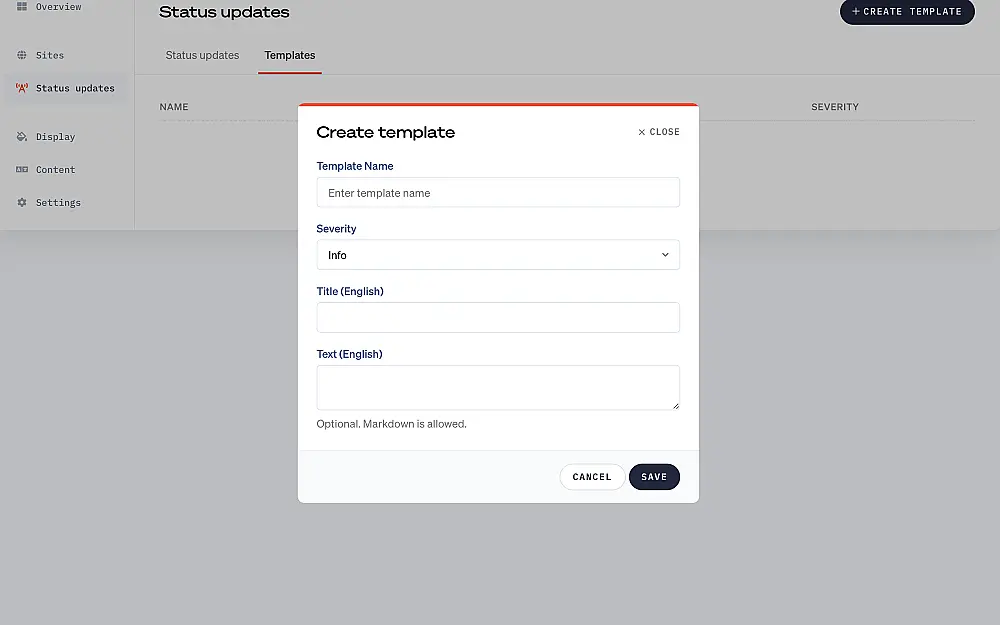
When you're managing a handful of client sites, setting things up manually is fine. Though if you're managing dozens of them, you're going to think twice about your approach. For agencies, development teams and platforms who are responsible for loads of websites, having to repeat the same…
We now support Google Chat
I'm pleased to share that we've can now notify you via Google Chat. Here's what that looks like: Our Google Chat notifications include: Visual status indicators with emojis (✅ for success, ⚠️ for warnings, ❌ for errors) Clear, concise messaging that tells you exactly what happened Quick…
Recipes for automating Oh Dear
Today we are releasing oh-dear-api-examples a brand-new open-source repository on GitHub. It curates bite-size scripts, helpers and ideas for helping you bulk-manage your Oh Dear account via the API. github.com/ohdearapp/oh-dear-api-examples How it works Installation in under a minute just following…
How to create dynamic status pages on demand
Clients expect transparency, especially when things go wrong. But manually updating a status page during an incident or maintenance window slows you down when speed matters most. Oh Dear’s status pages are more than just a pretty uptime dashboard. They’re fully API-driven and designed to scale…
Oh Dear now lets you verify redirect URLs during uptime checks
We’ve just rolled out a helpful new setting to give you tighter control over how uptime is measured: Redirect URL Validation. Why URL validation matters By default, our uptime checks follow redirects and consider the site to be "up" as long as a 200 OK response is reached, regardless of…
Oh Dear becomes the preferred website monitoring tool for Dutch education and research institutions
SURF is a Duth IT cooperative in service of educational and research institutions. In essence, they help out these organizations by vetting and building software and other tools that best suit their needs. For years they offered a website monitoring service of their own, SURFopzichter, to affiliated…
Typehinting Laravel validation rules using PHPStan's type aliases
Static analysis is a powerful tool that examines your code without actually running it, catching bugs and type mismatches before they reach production. For PHP developers, PHPStan has become the go-to solution, and Laravel developers often use Larastan - a wrapper that adds Laravel-specific…
5 tips for managing client sites with Oh Dear
Managing dozens (or hundreds) of client sites can quickly become chaotic without the right tools. Whether you're running an agency, internal platform team or dev shop, visibility and control are everything. That's where Oh Dear comes in. Oh Dear is an all-in-one monitoring service that gives you a…

Introducing our improved uptime check
The past few months, we’ve working on improving our uptime check. We proud to announce that this improved check is now available for all users. You don’t have to do anything to get it (unless you are not subscribed to Oh Dear, in that case your should subscribe to Oh Dear 😄), all our users…
Managing monthly reports with the API
On the first of every month we generate an extensive PDF report for every site. This report contains a summary of all check results for the month and is a snapshot available to you and your team via email and the Oh Dear dashboard. We keep the report history so each month can be viewed in a browser…
Here are 10 ways to prevent website downtime
Every minute of website downtime cost large organizations an average of $9,000. That’s half a million dollars every hour, damn. And that’s just the average. If your organization heavily relies on your website to do business, that cost can increase even further. Needless to say, preventing…